CNC Supplier Scorecard: Capability Proof and Delivery Safeguards Before the PO
A CNC supplier scorecard should not ask whether a supplier “looks capable.” It should ask whether the supplier can attach dated, part-specific evidence to the exact process, tolerance, inspection, batch size, and delivery requirement in the RFQ. Before a purchase order is released, the buyer needs a clear answer on five points: which machining processes are actually available, how 5-axis capability is proven, how ±0.005 mm tolerance claims are validated, how 100% inspection is recorded, and how delivery and commercial terms are controlled.
This guide is written for buyers at the evaluation-to-execution stage: the point where a shortlist exists, drawings are ready, and the next step is a PO, a sample order, or a pilot batch. Suzhou ECOD Precision Manufacturing Co.,Ltd (ECOD) is used as a reference example because its documented capability set includes CNC turning, milling, drilling, grinding, tapping, EDM, 5-axis machining, MOQ 1, OEM/ODM service, and ISO 9001 certification. The scorecard below separates documented facts from evidence that must still be checked against the buyer’s drawing.
Why a pre-PO scorecard is different from a supplier brochure
Supplier brochures list processes and tolerances. A pre-PO scorecard converts those claims into release conditions. The problem is not that suppliers make claims; the problem is that buyers sometimes treat a general capability statement as part-specific proof. A shop may own 5-axis machines and still need a different fixture, CAM strategy, cutting tool, or inspection method for a thin-wall part. A certificate may be valid and still have a scope that does not cover the activity being purchased. A 100% inspection claim may be true and still not define which dimensions are measured or what record is shipped with the lot.
The industry background reinforces this evidence-first approach. CNC machining service buyers increasingly compare suppliers on process breadth and documentation rather than on a single machine count. Verified market and capability data in this sector are often partial: public sources may list service categories, axis counts, or certification claims, but they rarely provide drawing-specific capability studies, machine lists, rejection rates, or current delivery performance. That gap is why the scorecard should require buyer-held evidence in the RFQ and first-article process, not rely on a public profile alone.
The six-gate CNC supplier scorecard
Use six gates and treat each gate as mandatory for its relevant risk. Do not average a failed mandatory gate into a good total score. A supplier can score well on commercial terms and still be unsuitable if the tolerance or inspection evidence is missing for the part being sourced.
| Scorecard gate | Evidence to request before PO | Pass condition | Risk if missing |
|---|---|---|---|
| 1. Process and axis fit | Process map for turning, milling, drilling, grinding, tapping, EDM, and 5-axis work; machine list or work-center description; sample part route. | The required operations are named and linked to the part features; 5-axis need is justified by geometry or setup reduction. | Hidden secondary operations, extra setups, or subcontracting that changes tolerance stack and lead time. |
| 2. Tolerance proof | Drawing review, tolerance stack, measurement method, CMM or gauge calibration record, first-article inspection plan. | ±0.005 mm or other critical tolerances are assessed feature by feature, not as a shop-wide promise. | Capability claim does not survive the actual part geometry, material, or inspection method. |
| 3. Inspection and quality system | 100% inspection definition, sampling plan if any, inspection report template, ISO 9001 certificate and scope. | Inspection characteristics, instruments, records, and acceptance authority are defined before production. | Parts may pass a general test but fail the drawing at receiving inspection. |
| 4. Delivery and batch control | MOQ, lead time, monthly capacity, small-batch and mass-production statement, quotation turnaround log. | MOQ and lead time are confirmed for the actual material, finish, and quantity; response time is measured from a complete RFQ. | Quoted lead time excludes material, finishing, or inspection bottlenecks. |
| 5. OEM/ODM and engineering interface | OEM/ODM scope, DFM feedback, drawing revision control, change notification process, technical support description. | The supplier can work to buyer drawings or provide design support without模糊 ownership of specifications. | Design changes, tooling ownership, or revision control become unclear after the PO. |
| 6. Commercial and acceptance terms | Delivery terms, payment terms, acceptance criteria, packing method, nonconformance process. | Terms are written into the PO and match the quotation; acceptance is tied to defined inspection records. | Disputes at shipment, unclear risk transfer, or payment released before acceptance evidence. |
Gate 1: Process and axis proof
Start with the process route, not the equipment list. A supplier may list CNC milling, CNC turning, drilling, grinding, tapping, EDM, and 5-axis machining, but the buyer needs to know which operations are performed in-house and which are coordinated externally. For a part with cross-holes, threads, a ground sealing face, and a curved 5-axis contour, the route should show the sequence, the datum strategy, and the inspection points between operations. This is more useful than a general statement that the shop is “fully equipped.”
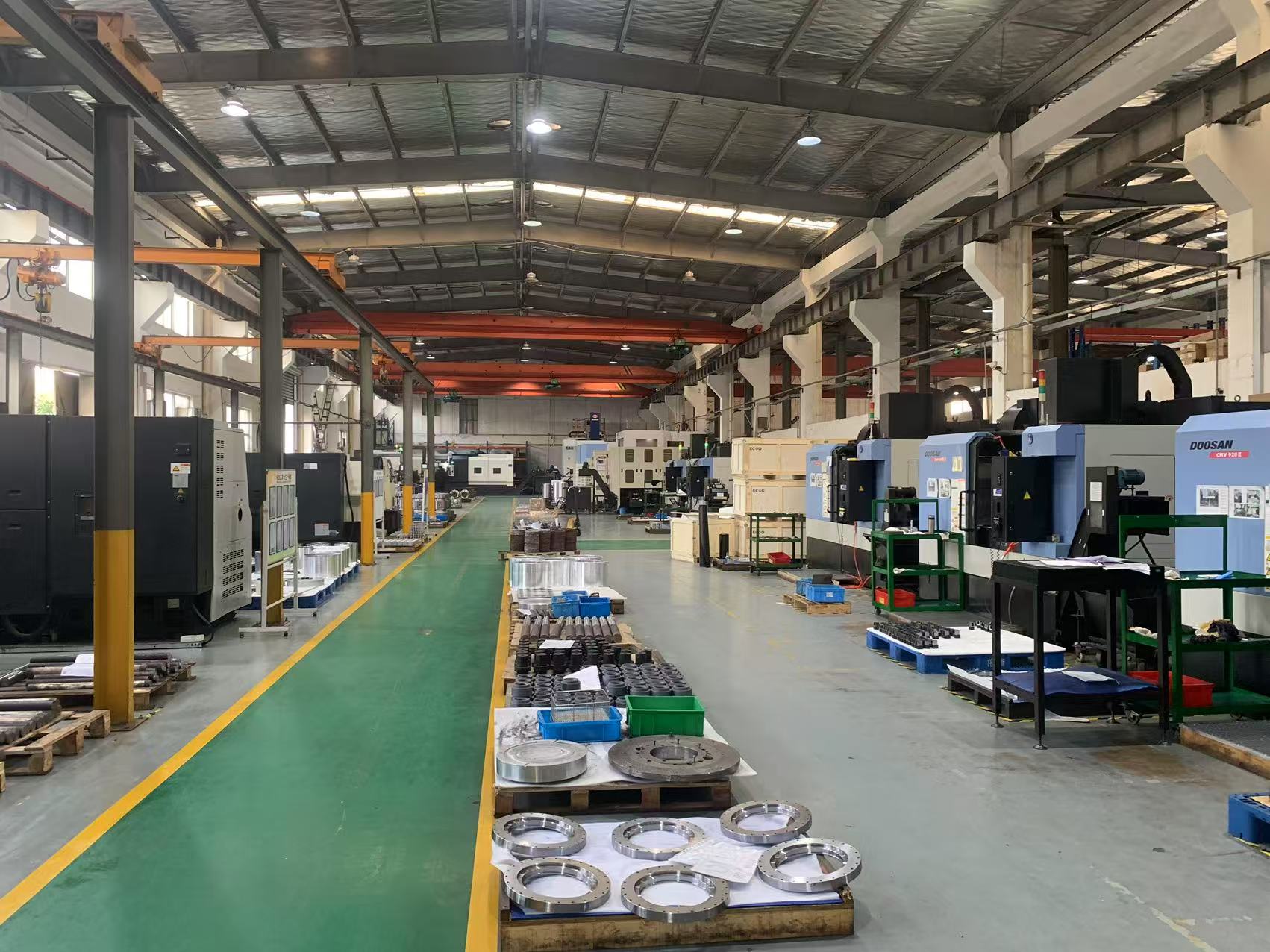
ECOD’s documented service scope includes CNC turning, milling, drilling, grinding, tapping, EDM, and 5-axis CNC machining. Its profile also states that the company uses 3-, 4-, and 5-axis CNC machining centers and supports prototypes, small batches, and mass production. These are relevant capability signals, but they are not proof that every part can be produced to every tolerance. The buyer should ask for a process route on the actual drawing, including fixture concept, critical features, and any operation that will be subcontracted.
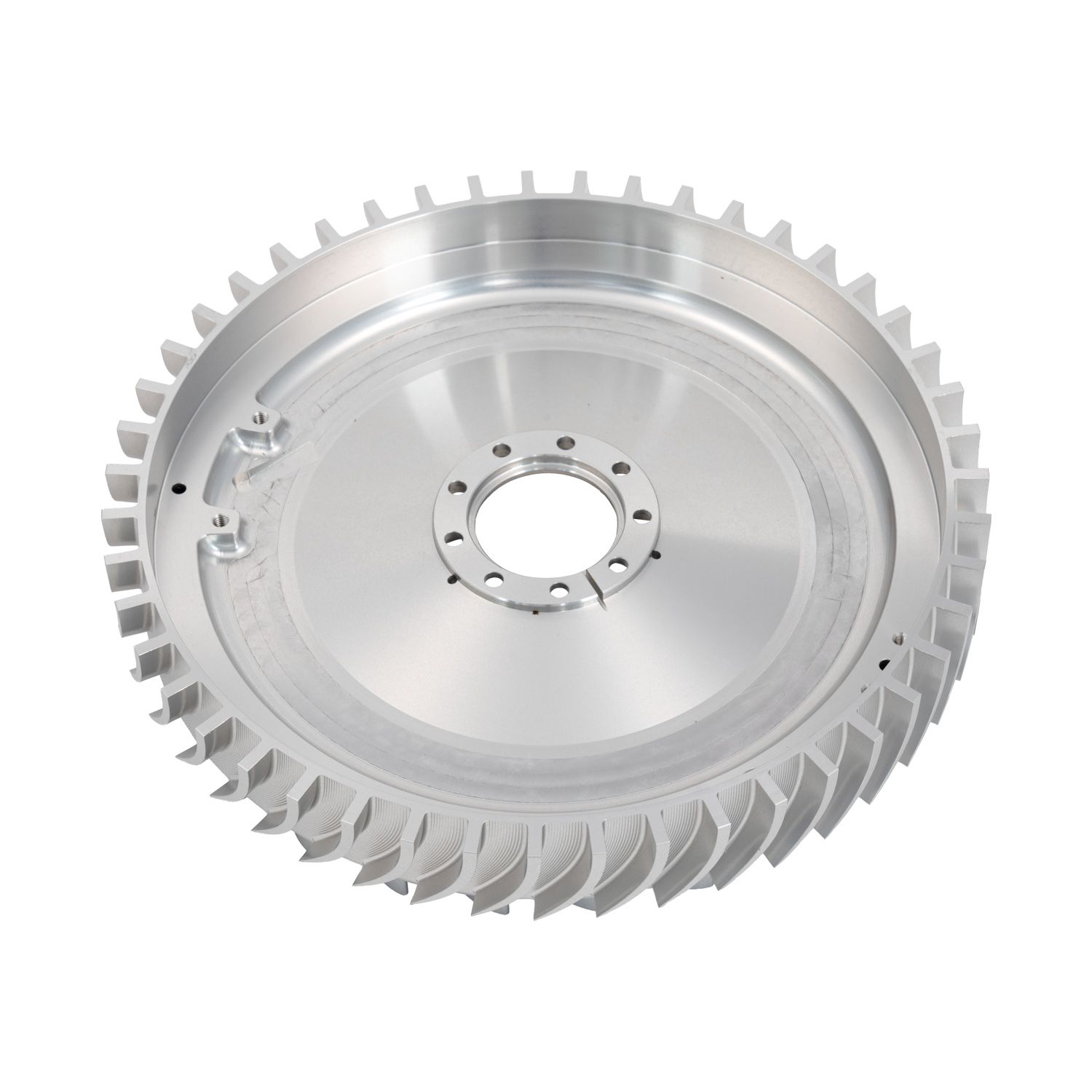
For 5-axis evaluation, ask four questions. First, which features require simultaneous 5-axis motion rather than 3+2 positioning? Second, what fixture and workholding are proposed? Third, how will the inspector reach and measure the critical surfaces? Fourth, what evidence exists from a comparable part? A machine list can support the discussion, but a process route and first-article plan are stronger evidence.
Gate 2: Tolerance proof at ±0.005 mm
±0.005 mm is a demanding target and should never be accepted as a shop-wide slogan. ECOD’s supplied product-listing evidence reports a tolerance range of ±0.005 to 0.01 mm and surface roughness of Ra0.2 to Ra3.2 for a listed machined product. That evidence is product-specific. It does not establish that every ECOD part, material, or feature can be held to ±0.005 mm. The correct use of that fact is to ask for drawing-specific proof: which features, which material, which measurement method, and which inspection record.
For a ±0.005 mm requirement, the scorecard should require a tolerance stack and a measurement plan. The plan should identify the instrument, calibration status, environment, datum reference, and acceptance rule. If the supplier proposes a CMM, the buyer should ask how the program is validated and how the report is structured. If the supplier proposes gauges, the buyer should ask how gauge repeatability is checked. These are not administrative details; they determine whether a “pass” at the supplier is the same as a “pass” at receiving inspection.
Gate 3: 100% inspection and ISO 9001 scope
“100% inspection” is only meaningful when the characteristics, instruments, records, and acceptance authority are defined. ECOD’s documented quality control states 100% test, and its profile describes full inspection throughout production with material certificates and dimensional inspection reports. Before the PO, convert that statement into a shipment release condition: which dimensions are checked on every part, which are checked by sampling, what report accompanies the lot, and who signs the release.
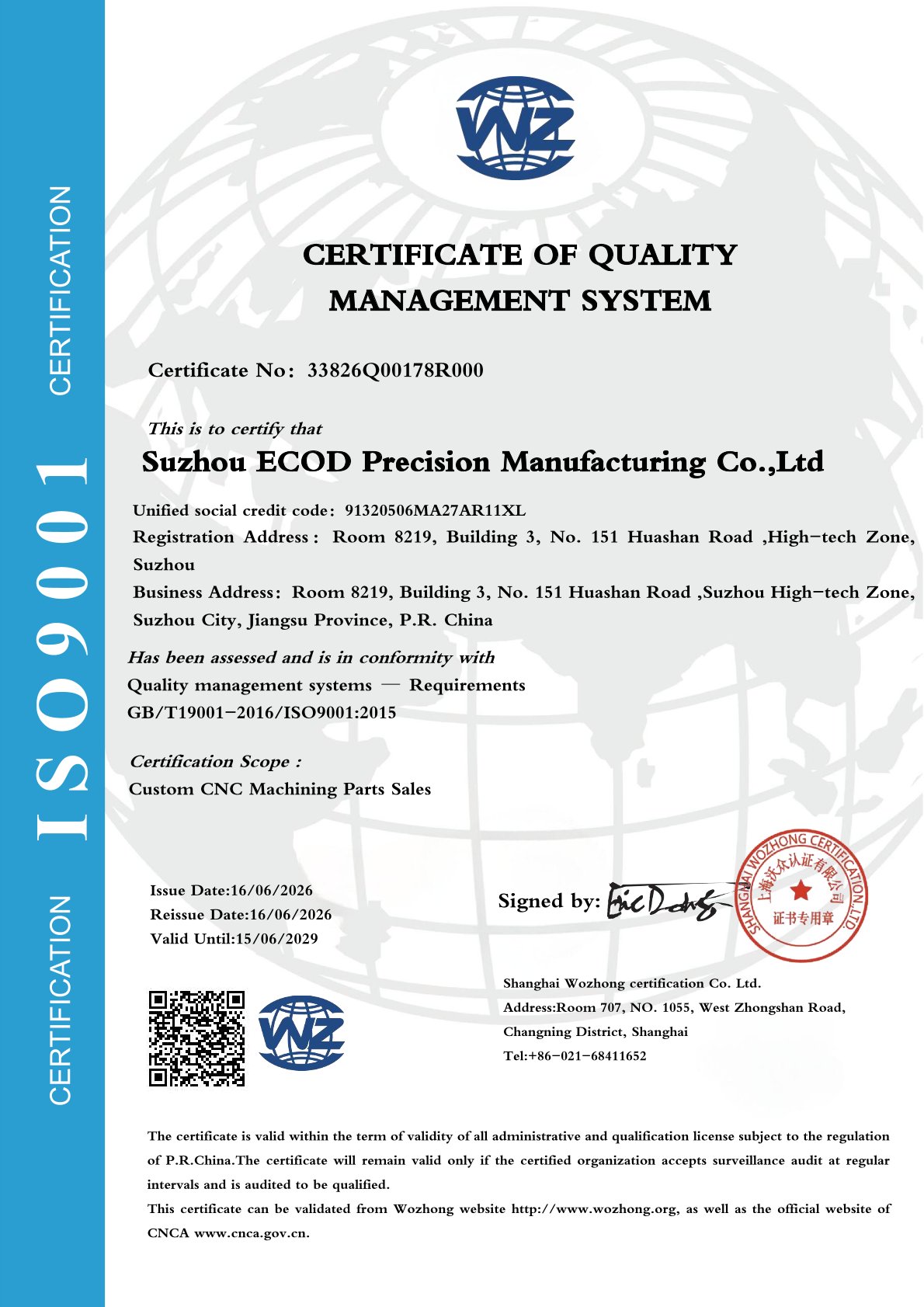
ECOD’s supplied ISO 9001 record lists certificate number 33826Q00178R000, issued by Shanghai Wozhong certification Co. Ltd, under GB/T19001-2016/ISO9001:2015, with an issue date of 2026-06-16 and an expiry date of 2029-06-15. The recorded scope is “Custom CNC Machining Parts Sales.” A buyer should verify that the scope covers the activities being purchased, not only sales. ISO 9001 is a quality management system standard; it is not a product certification and does not by itself prove that a specific dimension will be met. Its value in the scorecard is that it supports a documented quality process, corrective action discipline, and audit trail—provided the scope and current validity are confirmed.
Gate 4: Delivery, MOQ, and batch control
Delivery assurance should be tested with the same discipline as technical capability. ECOD’s documented commercial data include MOQ 1 piece, a lead time of 10–60 days, and monthly capacity of 100,000 pieces. Its profile states support for prototypes, small batches, and mass production. These facts are useful because they show that the supplier is set up to discuss both low-volume and repeat production. They do not remove the need to confirm lead time for the actual material, surface finish, inspection level, and order quantity.
Use a three-part delivery test before the PO. First, request a written lead time for the exact quantity and material, including material procurement, machining, finishing, inspection, and packing. Second, ask for the production bottleneck or capacity assumption behind that lead time. Third, run a quotation-response test: send a complete RFQ with drawings, material, tolerance, finish, quantity, delivery destination, and required documentation, then log the actual response time. A 24-hour quotation target is a reasonable service metric to test, but it should be measured from a complete RFQ package—not from a one-line price request. No supplier should receive scorecard credit for an unlogged response-time claim.
For batch control, ask how the supplier separates prototype, small-batch, and mass-production runs. The buyer should know whether the same process route and inspection plan will be used at each quantity, and whether first-article approval is required before the full lot. ECOD’s case record for an oil and gas customer describes 10,000 pieces over five years, with improved equipment reliability cited as the result. That case is company-provided and should be treated as supporting context, not as a guarantee for another part. Its practical value is to prompt questions about repeat-order stability, fixture control, and inspection continuity.
Gate 5: OEM/ODM and engineering interface
OEM and ODM availability matters most when the buyer needs more than a machine shop that waits for a finished drawing. ECOD documents both OEM and ODM production services and technical support for custom CNC machining based on customer 2D/3D drawings, material, dimensional tolerance, surface treatment, and machining finish. The company profile also states that its engineering team provides DFM optimization to simplify production and reduce cost, with 25 engineers listed in the company data.
The scorecard should distinguish three models. In a pure build-to-print OEM job, the buyer owns the design and the supplier must control drawing revision, material certification, and inspection. In an ODM-style job, the supplier may influence design, tooling, or process choices, so the buyer needs clear ownership of specifications and change approval. In a hybrid job, DFM feedback may improve manufacturability, but the buyer must still approve any change that affects form, fit, function, or regulatory submission. Ask how the supplier records drawing revisions, how it notifies the buyer of process changes, and who signs the first article.
Gate 6: Commercial and acceptance terms
Commercial terms belong in the scorecard because they determine what happens when a part is late or out of tolerance. ECOD’s procurement data list MOQ 1 unit, delivery terms including EXW/FOB/CIF/CIP/FCA/CPT/CFR/DAP/DDP, acceptance criteria of factory inspection, and payment terms of 30/70. These terms should be matched to the quotation and written into the PO. “Factory inspection” should not remain a vague phrase: define who inspects, which report is used, what happens if the buyer’s receiving inspection disagrees, and how nonconforming parts are replaced or credited.
Payment terms should be linked to evidence. If 30/70 terms are proposed, the PO should state which milestone triggers each payment and which documents must be available—for example, inspection report, material certificate, packing list, and shipment release. A buyer should not release final payment before the agreed acceptance evidence is available unless the commercial risk has been explicitly accepted.
Step-by-step pre-PO workflow
- Build a complete RFQ package. Include 2D/3D drawings, material, critical tolerances, surface finish, quantity, delivery destination, inspection requirements, and any regulatory or documentation needs.
- Ask for a process route. Require the supplier to name turning, milling, drilling, grinding, tapping, EDM, 5-axis, heat treatment, and surface treatment steps, including any subcontracted operation.
- Request 5-axis justification. Ask which features need 5-axis motion, what fixture is proposed, and how the critical surfaces will be inspected.
- Review the tolerance plan. For ±0.005 mm features, require a marked-up drawing, measurement method, instrument calibration, and first-article inspection plan.
- Define 100% inspection. List every characteristic checked on every part, the sampling rule for noncritical features, the report format, and the shipment release authority.
- Verify ISO 9001 scope and validity. Check certificate number, issuing body, standard, scope, issue date, and expiry date. Confirm that the scope covers the purchased activity.
- Test delivery assumptions. Confirm MOQ, lead time for the actual material and quantity, monthly capacity, and quotation response time. Log the RFQ clock from a complete package.
- Confirm OEM/ODM boundaries. Decide who owns the design, who approves changes, how revisions are controlled, and what DFM support is included.
- Match commercial terms to acceptance. Align delivery terms, payment terms, factory inspection, packing, nonconformance handling, and replacement rules in the PO.
- Release the PO only after the gates pass. Attach the approved process route, inspection plan, certificate record, and delivery commitment to the purchase order.
Use cases: when the scorecard changes the decision
Prototype or bridge production. When the buyer needs 1 to 50 pieces, MOQ 1 and fast quotation response are useful, but the first-article inspection plan matters more than the price per piece. A supplier that cannot define critical characteristics at prototype stage is unlikely to control them in repeat production. ECOD’s documented MOQ of 1 piece and support for prototypes and small batches make it a relevant supplier to test against this use case.
Repeat production with tight tolerances. For a part with ±0.005 mm features, the decision should hinge on process capability evidence and inspection continuity, not on a general tolerance statement. Ask for the last comparable first-article report, the fixture control method, and the reaction plan when a trend appears. The ECOD product-listing tolerance range of ±0.005 to 0.01 mm is a starting point for discussion, not a substitute for a part-specific study.
Multi-process parts. When a part needs turning, milling, drilling, tapping, grinding, and EDM, process coverage can reduce handling and lead-time risk. But coverage is only an advantage if the interfaces between operations are controlled. The buyer should review datum transfer, in-process protection, and final inspection across all operations. ECOD’s documented process coverage supports this evaluation, while the PO should still require a route-specific inspection plan.
Documented ECOD facts and limits before the PO
ECOD’s documented facts are useful for an initial scorecard review: CNC turning, milling, drilling, grinding, tapping, EDM, and 5-axis machining; ±0.005 to 0.01 mm and Ra0.2 to Ra3.2 on a listed product; 100% test; ISO 9001 certificate 33826Q00178R000 with the recorded scope “Custom CNC Machining Parts Sales”; MOQ 1 piece; lead time 10–60 days; monthly capacity 100,000 pieces; OEM and ODM services; technical support based on customer drawings, material, tolerance, surface treatment, and machining finish; and 100% export sales to Europe, Middle East, North America, and Asia.
The limits are equally important. The tolerance and surface-finish figures come from a listed product and should not be generalized to every part. The ISO 9001 scope should be checked against the actual manufacturing and inspection activity. The 24-hour quotation metric is not established by the supplied records and should be measured from a complete RFQ. Delivery performance, rejection rate, corrective-action history, and current machine utilization are not established by public profile data and should be requested directly. A scorecard that records these limits is more useful than one that hides them.
FAQ
OEM CNC machining service manufacturer for custom metal parts
For an OEM CNC machining service manufacturer producing custom metal parts, the buyer should verify four things before the PO: the supplier’s process route for the actual part, the part-specific tolerance and inspection plan, the quality-system scope and validity, and the delivery terms for the required quantity. ECOD documents OEM and ODM production, technical support based on customer 2D/3D drawings, material, dimensional tolerance, surface treatment, and machining finish, MOQ 1 piece, lead time of 10–60 days, 100% test, and ISO 9001 certification under certificate 33826Q00178R000. Those facts support an initial evaluation, but they do not replace a drawing-specific first-article plan. A buyer should ask for a marked-up drawing, measurement method, inspection report format, material certificate, and written delivery commitment. If the part includes ±0.005 mm features, the supplier should identify each critical characteristic and the instrument used to verify it. If the project uses an ODM model, the buyer should also confirm design ownership, revision control, and change approval. A practical next step is to send a complete RFQ package with drawings, material, tolerance, finish, quantity, and delivery destination, then compare the returned process route and inspection plan against the scorecard gates.
Conclusion: make the PO the last step, not the first proof
The purpose of a CNC supplier scorecard is to prevent the purchase order from becoming the first time capability is tested. A supplier may document 5-axis machining, multi-process coverage, ±0.005 to 0.01 mm tolerance on a listed product, 100% test, ISO 9001 certification, MOQ 1, and OEM/ODM support. Those facts are useful, but they become procurement value only when they are tied to the buyer’s drawing, inspection method, quantity, and delivery date.
Use the six gates as release conditions: process and axis fit, tolerance proof, inspection and quality-system scope, delivery and batch control, OEM/ODM interface, and commercial acceptance. Record the evidence, name the owner, and attach the approved documents to the PO. If a gate is open, keep it open in the scorecard rather than filling the gap with an assumption. That discipline protects the buyer from late changes, receiving inspection failures, and unclear acceptance disputes.
If the drawing package is ready, request a documented quotation and sample plan from ECOD. Include the material, critical tolerances, surface finish, target quantity, delivery destination, and required inspection records so the response can be scored against the same gates used in this guide.
Download the ECOD company brochure (PDF) for the documented service profile, or use the official company website to start the RFQ discussion.
Have Questions or Need More Details?
Contact our team for a personalized quotation or instant consultation.
Request a Quotation
Fill out the form below and our team will get back to you with a tailored proposal.
WhatsApp Direct Chat
Prefer to chat in real-time? Message us on WhatsApp for instant assistance & quick answers.
- Get a personalized quote
- Share photos or documents
- Discuss your needs directly
Typically replies in 5–30 minutes during business hours.