
Ranked: CNC Machining Service Capabilities for Aerospace, Oil & Gas, Energy & Medical
Ranked: CNC Machining Service Capabilities for Aerospace, Oil & Gas, Energy & Medical
Ranked by how much they change the outcome on real aerospace, oil & gas, energy and medical work, the seven CNC machining capabilities that matter most are 5-axis CNC machining, CNC turning, CNC milling, precision grinding, EDM, drilling and tapping. Five service conditions decide whether a capable shop is actually usable: 100% inspection before shipment, ISO 9001 certification, OEM/ODM engineering support, a 1-piece minimum order quantity, and a 24-hour quotation turnaround.
Suzhou ECOD Precision Manufacturing Co., Ltd (ECOD) is a precision CNC machining manufacturer founded in 2005 in Suzhou, China, operating 3/4/5-axis CNC machining centers, CNC lathes and precision grinding equipment, and holding ISO 9001 certification for custom CNC machining parts. This guide ranks the capabilities and the service conditions a buyer should secure first when one supplier has to serve four industries with different risk profiles.

Aerospace is the first of four industries in this ranking; the same process set is applied to oil & gas, energy and medical parts.
Problem Definition: Why Capability Lists Rarely Help a Buyer Decide
Most CNC machining service pages state the same four things: tight tolerances, advanced equipment, full inspection and fast quotes. None of it is false, and none of it is decision-grade. A buyer comparing three quotations for a titanium medical housing and a stainless steel downhole component needs to know which capability controls the risk on each part, and in what order those capabilities should be verified before a purchase order is released.
Three failure modes repeat in procurement reviews:
- Process prestige outranks process function. 5-axis machining is listed first on almost every supplier page, yet a rotationally symmetrical fitting gains nothing from it, while a contoured aerospace bracket gains almost everything.
- Tolerance is quoted without an inspection method. A ±0.005 mm claim means little until it is tied to the measuring equipment, the sampling plan and the report that ships with the parts.
- Service conditions are treated as afterthoughts. Certification scope, minimum order quantity and quotation turnaround decide whether a technically capable shop can be used at all — particularly on a first order of one piece.
This ranking is therefore built on three questions per capability: how many of aerospace, oil & gas, energy and medical it genuinely serves; how much part risk it removes through fewer setups, shorter tolerance stacks or fewer secondary operations; and whether the claim can be verified before the order is placed.
Industry Background: A Concentrated Supply Base Serving Four Standards
The supply side is large and geographically concentrated. Business Research Insights estimates the global CNC machining services market at USD 58.33 billion in 2026 and projects USD 108.3 billion by 2035. Milling holds the largest machine-type share at 31.4% in 2025 (Dataintelo), a figure driven substantially by aerospace demand. Asia Pacific accounted for 55.70% of the global CNC machine market in 2025 (Fortune Business Insights), and within China, Jiangsu, Guangdong and Zhejiang together control 82.2% of national CNC machining capacity (Haizol). Suzhou — where ECOD is based — sits inside that Jiangsu cluster.
Capacity explains availability; it does not explain suitability. The four industries in this article are separated less by machine type than by documentation and release requirements:
- Aerospace programmes commonly require AS9100D, a standard that incorporates ISO 9001 and adds more than 100 further requirements for safety and reliability (SAE International).
- Medical device production is governed by ISO 13485 for quality management systems (ISO).
- Oil & gas and energy work place the emphasis on material traceability, durability in harsh operating environments and repeatability across long production runs.
That hierarchy matters when reading any capability ranking. A shop can hold a genuine ISO 9001 certificate and still not be approved for a specific aerospace or medical programme, because the industry standard sits on top of ISO 9001 rather than inside it.
Detailed Solution: The Seven CNC Machining Capabilities, Ranked
The ranking below orders the processes ECOD runs — CNC turning, CNC milling, drilling, grinding, tapping and EDM, plus 5-axis machining — by how much leverage each one gives a buyer in aerospace, oil & gas, energy and medical work. It is a ranking of leverage, not of difficulty.
RANK 15-Axis CNC Machining
5-axis machining ranks first because it removes the largest single source of error in complex parts: re-fixturing. Every additional setup adds a datum shift and a tolerance stack. Machining five faces in one setup protects the relationships between features — hole patterns to bores, bores to mounting faces — that aerospace brackets, UAV structures, angled oil & gas bodies and contoured medical instruments depend on.
ECOD operates 3/4/5-axis CNC machining centers and lists 5-axis CNC machining as a standing product category rather than a special request. The boundary is worth stating plainly: 5-axis does not replace turning for rotationally symmetrical parts, and the machine alone does not create a tolerance. The ±0.005 mm precision level ECOD works to is the output of machine, fixturing, tooling and the inspection loop acting together.
RANK 2CNC Turning
Turning ranks second because it carries the highest share of precision work in oil & gas and medical programmes. Shafts, bushings, connectors, threaded bodies, fittings and instrument components are rotational by design, and turning holds diameter, concentricity and thread form in one continuous cut rather than across multiple operations.
ECOD runs CNC lathes alongside its machining centers and produces CNC turning parts in stainless steel, titanium, brass, copper, carbon steel and aluminium. For downhole and instrument parts the practical question is not whether a shop can turn, but whether it can hold the thread and the seal diameter across a 10,000-piece run without drift — which is as much an inspection question as a machining one.
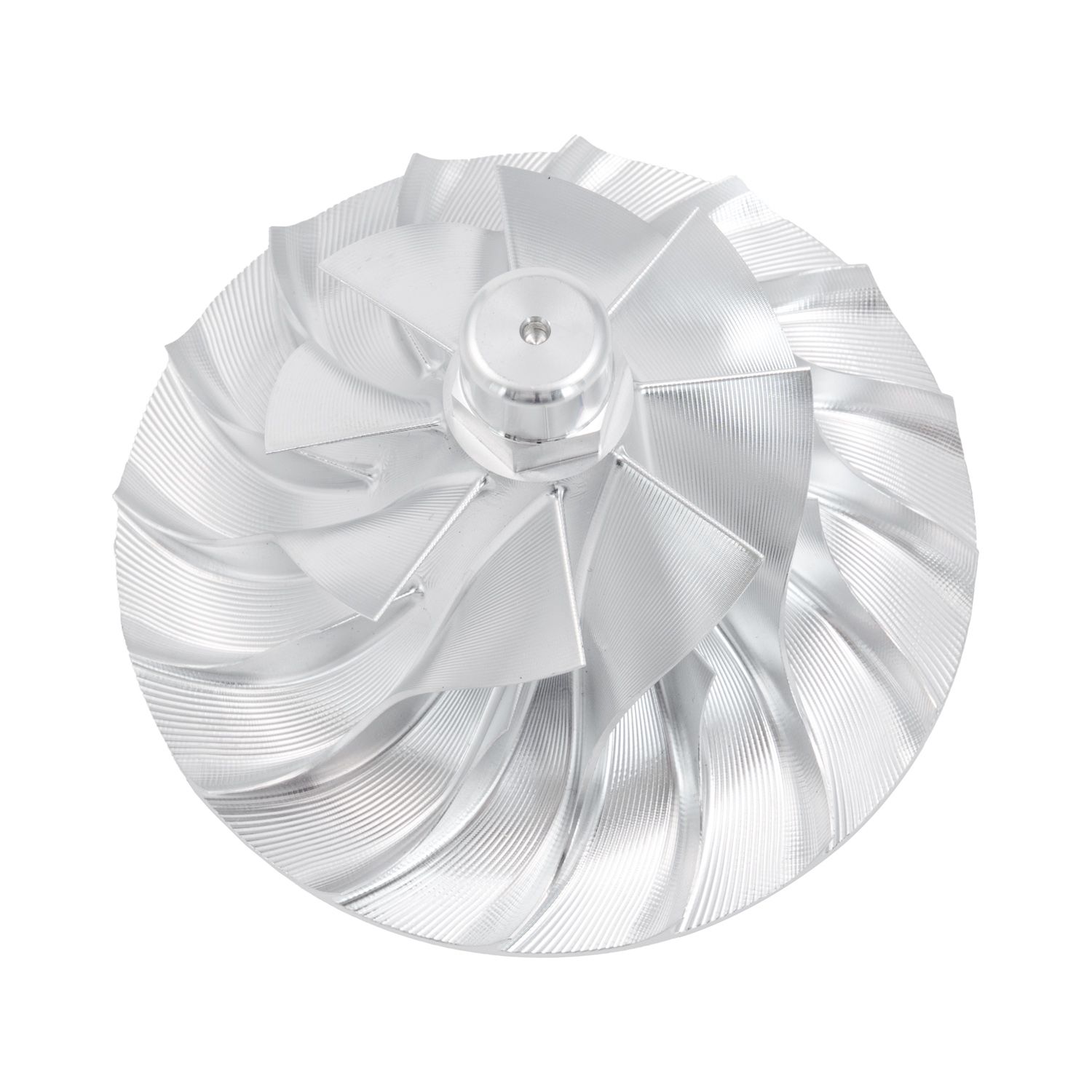
Precision machined parts for aerospace work, where multi-face geometry and tight feature relationships drive the process choice.
RANK 3CNC Milling
Milling ranks third even though it is the largest machine category by share (31.4% in 2025). It produces the prismatic families — housings, manifolds, brackets, plates and mounting blocks — that appear in essentially every RFQ across the four industries. It sits below turning and 5-axis because milling is rarely the capability that decides whether a part can be made; it is the capability that decides how economically the part is made once the critical features are secured.
RANK 4Precision Grinding
Grinding ranks fourth and is the capability most often added late. It typically follows heat treatment, where hardness removes the option of cutting and where surface finish and dimensional control have to be recovered rather than created. ECOD maintains precision grinding equipment in-house, which keeps the finishing step inside the same quality system as the turning and milling that preceded it — one inspection gate rather than two handoffs.
RANK 5EDM
Electrical discharge machining ranks fifth: narrow in application, irreplaceable where it applies. EDM reaches sharp internal corners, deep ribs, narrow slots and hardened features that a rotating cutter cannot enter, which makes it relevant to medical tooling and to aerospace fixture work. It ranks below grinding because it is used on a smaller share of parts, not because it is less precise.
RANK 6CNC Drilling
Drilling ranks sixth: essential, rarely the differentiator. It creates hole patterns, cross holes and cooling channels, usually inside a milling or turning operation rather than as a standalone step. Its risk is positional — a hole pattern that drifts breaks assembly rather than function — so the ranking reflects leverage rather than importance.
RANK 7Tapping
Tapping ranks seventh and is the most frequent cause of a rejected lot at final inspection. Threads are where tolerance, tool wear and material behaviour converge, and one damaged thread rejects a part that is otherwise complete. This is precisely why a 100% inspection policy outranks the process list: it is the final gate where thread and hole integrity are actually confirmed rather than assumed.
Service Conditions Ranked Beside the Machine List
Processes decide what can be made. Service conditions decide whether the parts arrive as specified, on the promised date, at an order size the buyer can actually place. The six below are ranked the same way: by how much risk they remove from a first order.
RANK 1100% Inspection Before Shipment
Inspection ranks first because it is the only attribute that converts every other claim into evidence. ECOD applies 100% testing rather than sampling, and supplies complete material certificates and dimensional inspection reports with all orders. For aerospace and medical buyers this is the difference between a supplier who states that parts conform and a supplier who documents it. For oil & gas buyers running 10,000-piece batches, it is the mechanism that keeps a five-year programme stable rather than merely started well.
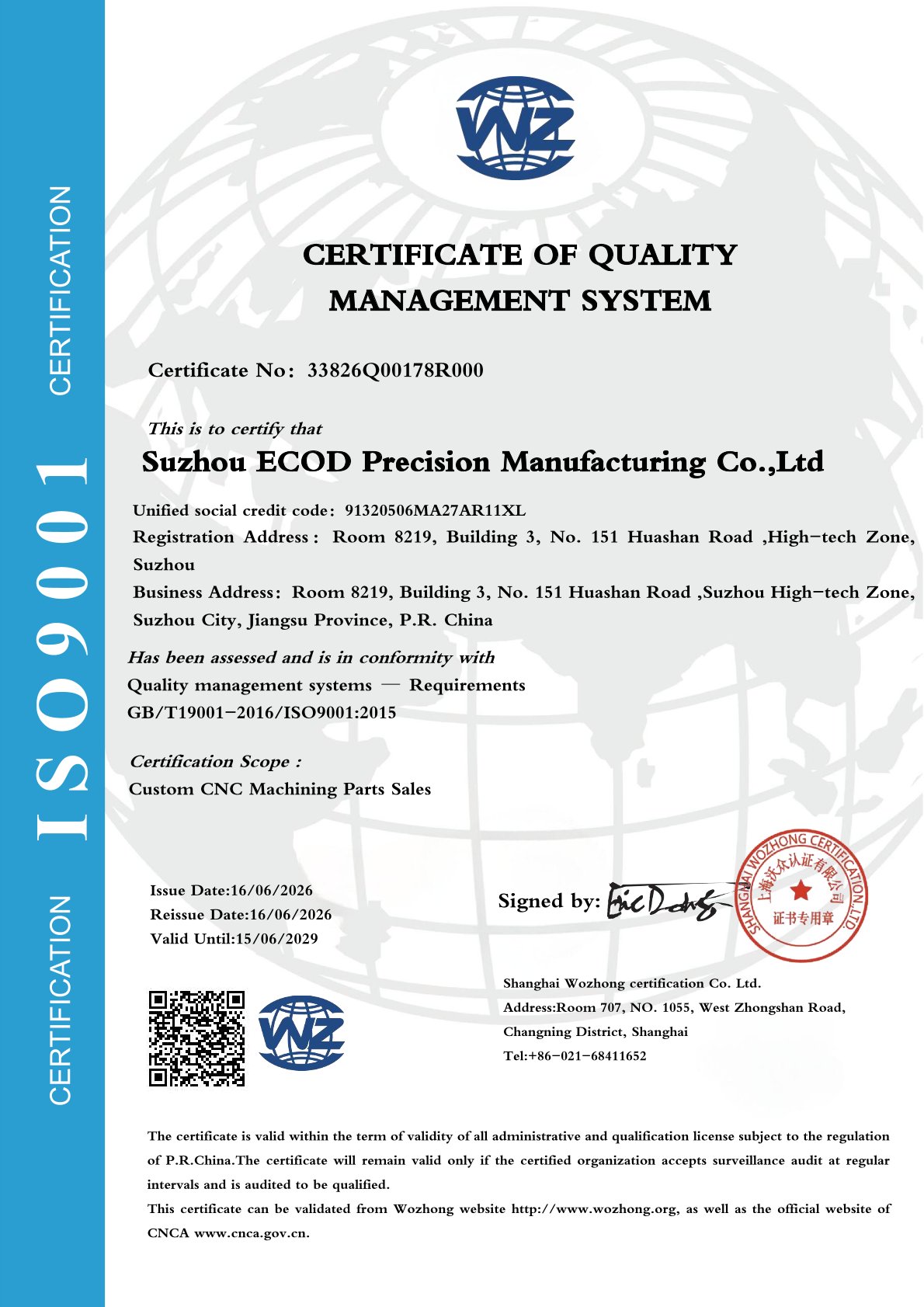
A certificate is only useful if it can be checked: number, standard, issuer, scope and validity dates should all be verifiable.
RANK 2ISO 9001 Certification With a Traceable Certificate
Certification ranks second because it sets the floor for how the first-ranked attribute is executed. ECOD's certificate is checkable on four points: number 33826Q00178R000, standard GB/T19001-2016/ISO9001:2015, issuer Shanghai Wozhong certification Co. Ltd, and validity from 16 June 2026 to 15 June 2029, with a scope of custom CNC machining parts sales. A buyer can verify each of those against the issuing body.
The limitation matters as much as the certificate. ISO 9001 is a quality management baseline, not an aerospace or medical approval. Where AS9100D or ISO 13485 is required by the programme, that approval has to be confirmed on its own terms.
RANK 3OEM/ODM Support and DFM Engineering
Engineering support ranks third because it determines cost before the first chip is cut. ECOD provides both OEM and ODM production services, and its team of 25 engineers works directly from customer 2D/3D drawings, material, dimensional tolerance, surface treatment and machining finish, with DFM optimisation to simplify production and reduce cost. Precision CNC Machining is quoted as an OEM service — no standard catalogue model — because every order is built from the customer's drawing. During evaluation, DFM feedback delivered with the quotation is often worth more than a lower unit price on a route that will generate scrap.
RANK 4MOQ of 1 Piece With Volume Capacity Behind It
The minimum order quantity ranks fourth because it is the single attribute that most often blocks an otherwise suitable supplier. ECOD's MOQ is 1 piece — a single unit can be ordered for a prototype, a replacement part or a first article — while monthly capacity stands at 100,000 pieces. Holding both ends is unusual: prototype-scale ordering is normally a prototype shop's business, and 100,000-piece months belong to production shops. The combination is what allows a buyer to validate and then scale with one supplier instead of re-qualifying a second one.
RANK 524-Hour Quotation Turnaround
Quotation speed ranks fifth because it is a proxy for how well engineering and estimating are connected. ECOD quotes within 24 hours, which compresses the evaluation cycle that usually consumes most of a project's calendar time. Speed alone is not the benefit: a quote that arrives in a day but omits the process route, inspection plan or material certificate requirement simply moves the delay downstream. Buyers should read the quotation as a short manufacturing plan, not as a price alone.
RANK 6Lead Time, Commercial Terms and Technical After-Sales
Commercial conditions rank sixth only because they are negotiated at the end, not because they are minor. ECOD states production lead times of 10–60 days depending on process route and volume, offers EXW, FOB, CIF, CIP, FCA, CPT, CFR, DAP and DDP delivery terms, works on 30/70 payment terms, and accepts factory inspection as the acceptance criterion. After-sales support is technical rather than administrative: the same engineering function that reviews the drawing answers questions after delivery, which matters most on first articles and repeat orders where a drawing revision has slipped through.
Comparison Table: The Capability Ranking at a Glance
| Rank | Capability | Heaviest industry fit | Why it ranks here | Verified ECOD position |
|---|---|---|---|---|
| 1 | 5-axis CNC machining | Aerospace, medical, energy | Removes re-fixturing and tolerance stack on multi-face parts | 3/4/5-axis CNC machining centers; 5-axis listed as a standing category |
| 2 | CNC turning | Oil & gas, medical | Holds diameter, concentricity and thread form in one continuous cut | CNC lathes; stainless steel, titanium, brass and copper machining |
| 3 | CNC milling | All four industries | Largest machine-type share at 31.4% in 2025; produces prismatic families | CNC milling parts listed as a standing category |
| 4 | Precision grinding | Aerospace, medical | Recovers tolerance and surface finish after heat treatment | Precision grinding equipment held in-house |
| 5 | EDM | Medical tooling, aerospace fixtures | Reaches sharp internal corners and hardened features | EDM included in the stated process scope |
| 6 | CNC drilling | All four industries | Positional accuracy of hole patterns and cross holes | Drilling included in the stated process scope |
| 7 | Tapping | All four industries | Thread integrity at final assembly and inspection | Tapping included in the stated process scope |
Comparison Table: Service and Commercial Facts
| Attribute | Verified detail |
|---|---|
| Minimum order quantity | 1 piece (1 unit) |
| Monthly capacity | 100,000 pieces |
| Lead time | 10–60 days |
| Quality control | 100% test; material certificates and dimensional inspection reports supplied with all orders |
| Certification | ISO 9001, certificate 33826Q00178R000, Shanghai Wozhong certification Co. Ltd, valid 16 June 2026 to 15 June 2029, scope: Custom CNC Machining Parts Sales |
| Production mode | OEM / ODM, customised per customer 2D/3D drawings, material, dimensional tolerance, surface treatment and machining finish |
| Materials | Carbon steel, stainless steel, aluminium, brass, copper, titanium, plastic |
| Payment terms | 30/70 |
| Delivery terms | EXW, FOB, CIF, CIP, FCA, CPT, CFR, DAP, DDP |
| Acceptance criteria | Factory inspection |
Step-by-Step Breakdown: Turning the Ranking Into a Purchasing Sequence
A ranking is only useful if it converts into an order of operations. The seven steps below reflect how a first enquiry usually moves from drawing to repeat order.
- Classify the part family before discussing suppliers. Rotationally symmetrical parts belong on turning; prismatic parts on milling; multi-face geometry on 5-axis; hardened features on grinding or EDM. A part that spans two families should be quoted as one route, not as two independent jobs.
- Fix the tolerance and the inspection method together. Before accepting a ±0.005 mm figure, establish which features it applies to and which report proves it. A tolerance without a measurement method is a marketing statement.
- Match material to process and to documentation. The working material list spans carbon steel, stainless steel, aluminium, brass, copper, titanium and plastic. Titanium and stainless steel drive tool wear and cycle time, so lead time should be read per material rather than as a single number.
- Decide which secondary operations stay under one roof. Drilling, tapping, grinding and EDM at the same supplier remove handling and re-datuming, but only if all four sit behind the same inspection gate.
- Size the order against MOQ and capacity. A 1-piece MOQ supports validation and spares; 100,000 pieces per month supports serial supply. Confirm both, because a supplier who can do one often cannot do the other.
- Read the 24-hour quotation as a manufacturing plan. It should state the process route, the material certificate, the inspection report, a lead time within the 10–60 day range, the delivery term (EXW through DDP) and 30/70 payment terms.
- Validate with a first article, then convert to a repeat order. Factory inspection acceptance plus a dimensional inspection report gives a documented baseline. A repeat order placed against that baseline is what turns a one-off purchase into a stable supply relationship.
Use Cases: Where the Ranking Proves Itself
Aerospace — UAV structure programme, Russia. A UAV manufacturer ordered 1,000,000 pieces over one year. The requirement was stable quality in mass production, with parts fully matching aerospace industry precision standards. Reading the ranking backwards explains the route: 5-axis machining and turning carried the geometry, 100% inspection carried the evidence, and a 1-piece MOQ allowed the first articles to be proved before volume was committed.
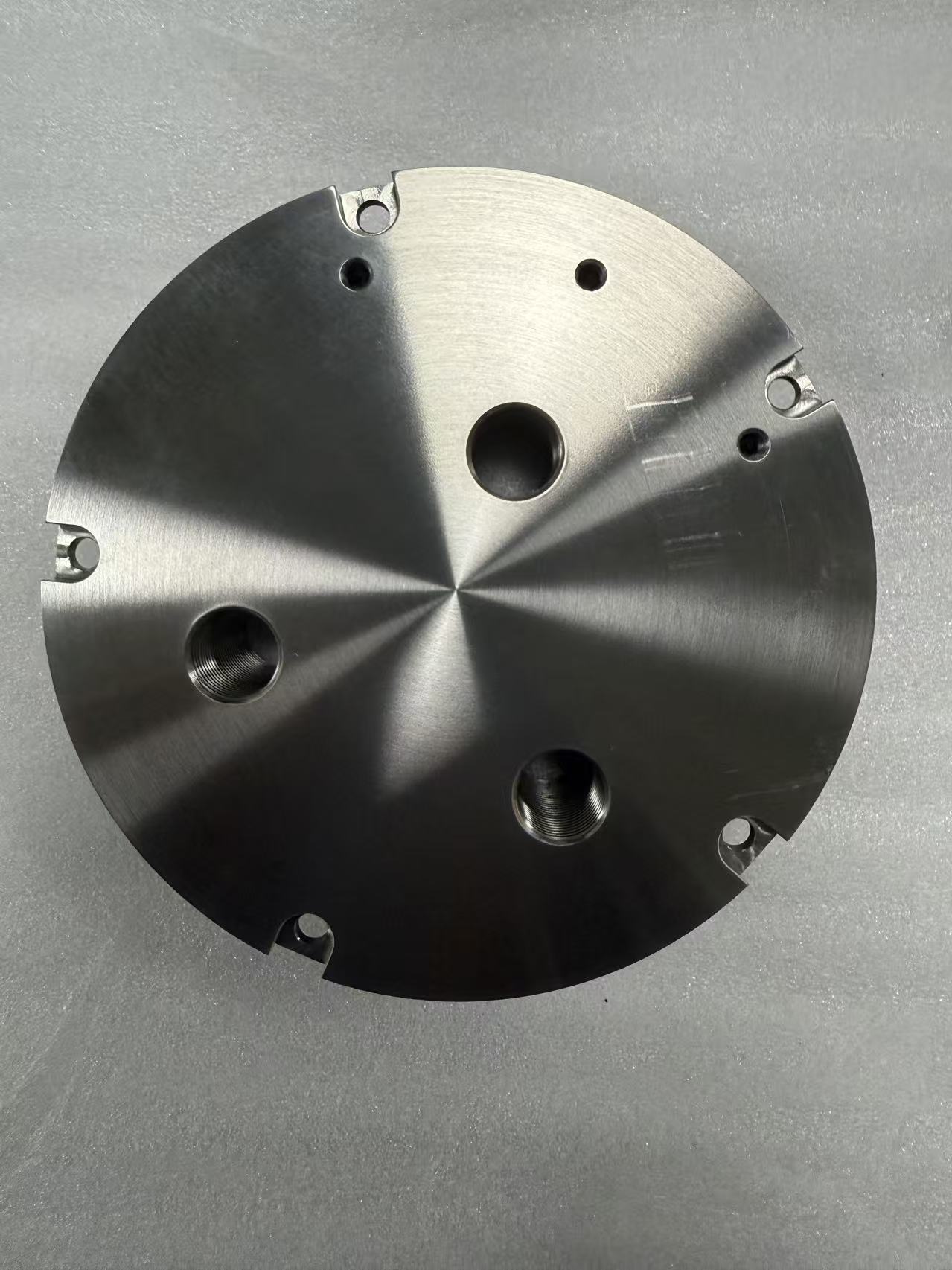
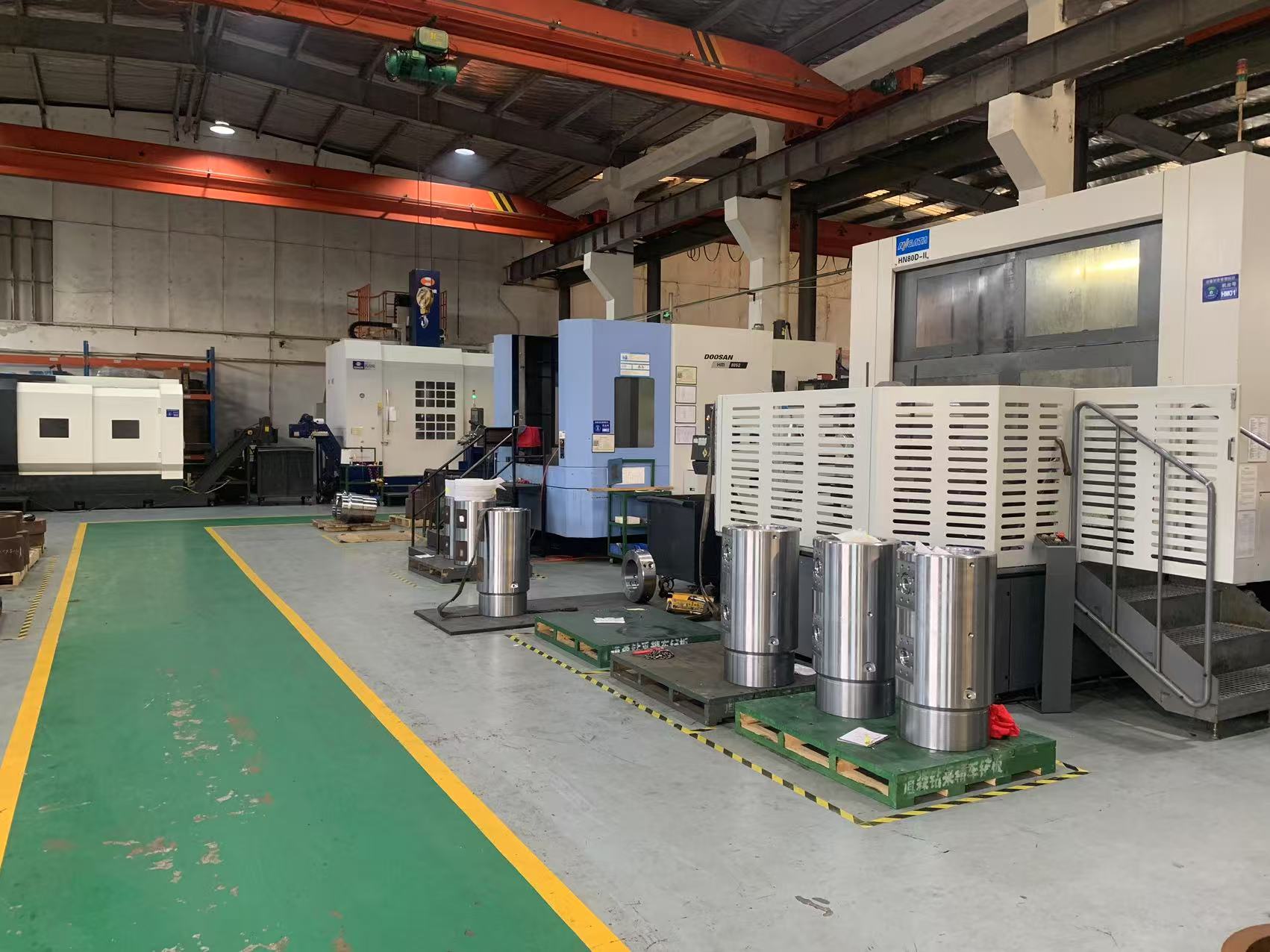
Oil & gas components machined for harsh operating environments, where material traceability and repeatability matter more than process count.
Oil & gas — equipment components, United Arab Emirates. A gas & oil industry customer ordered 10,000 pieces across a five-year supply relationship for gas & oil equipment. The stated result was improved equipment reliability, with the parts adapted to harsh oil & gas working environments. Five years and 10,000 pieces is an inspection story as much as a machining story: repeat orders only continue when every batch arrives with the same dimensional evidence as the first.
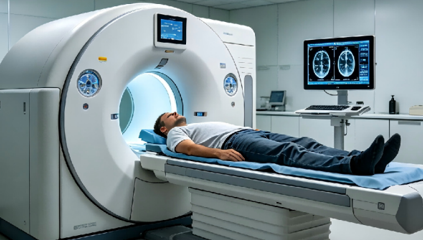
Medical device work concentrates on titanium and stainless steel components, where documentation is part of the deliverable.
Energy and medical — where the ranking changes shape. ECOD's stated applicable industries include energy and medical devices, and both lean on the same core: titanium and stainless steel machining, 5-axis work for contoured geometry, and 100% inspection before shipment. The difference is scope. Energy buyers tend to optimise for durability and repeatability across long runs, while medical buyers ask first about quality management scope. That is why the certification note in this article is not a footnote: where a programme requires ISO 13485, it must be confirmed directly rather than inferred from an ISO 9001 certificate.
FAQ
Is ECOD ISO 9001 certified for CNC machining, and what exactly does the certificate cover?
Yes. ECOD holds ISO 9001 certificate number 33826Q00178R000, issued on 16 June 2026 by Shanghai Wozhong certification Co. Ltd against the standard GB/T19001-2016/ISO9001:2015, valid until 15 June 2029. The certified scope is “Custom CNC Machining Parts Sales.” The certificate can be verified with the issuing body on those four points. It is a quality management certification, not an aerospace or medical device approval: programmes requiring AS9100D or ISO 13485 need separate confirmation.
Which CNC machining processes and materials can ECOD handle within one order?
ECOD's process scope covers CNC turning, CNC milling, drilling, grinding, tapping and EDM, supported by 3/4/5-axis CNC machining centers, CNC lathes and precision grinding equipment, with 5-axis CNC machining, CNC milling parts, CNC turning parts and precision machined components listed as standing product categories. Materials machined include carbon steel, stainless steel, aluminium, brass, copper, titanium and plastic. Keeping turning, milling, drilling, grinding, tapping and EDM in one quality system means secondary operations do not leave the inspection loop.
Can ECOD act as an OEM CNC machining service manufacturer for custom metal parts?
Yes. ECOD provides both OEM and ODM production services, and manufactures to customer 2D/3D drawings including material, dimensional tolerance, surface treatment and machining finish. Engineering support is provided by a team of 25 engineers, with DFM optimisation used to simplify production and reduce cost. Minimum order quantity is 1 piece, monthly capacity is 100,000 pieces, and lead time runs 10–60 days. Approximately 100% of output is exported, with markets in Europe, the Middle East, North America and Asia.
What are the minimum order quantity, payment terms and delivery terms?
The minimum order quantity is 1 unit, and payment terms are 30/70. Delivery terms available are EXW, FOB, CIF, CIP, FCA, CPT, CFR, DAP and DDP. The acceptance criterion is factory inspection, supported by material certificates and dimensional inspection reports issued with the order.
How quickly can a quotation and a first batch be arranged?
ECOD issues quotations within 24 hours of receiving a drawing and requirement details. Because the MOQ is 1 piece, a single-part trial or first article can be ordered before any volume commitment, and production lead time runs 10–60 days depending on process route and volume. To start, send 2D/3D drawings to info@ecodcn.com or message +86 15527751869 on WhatsApp; the full capability overview is available in the ECOD product brochure.
Conclusion
For aerospace, oil & gas, energy and medical work, the defensible order is: 5-axis CNC machining first, because it removes re-fixturing risk on multi-face parts; turning second, because it carries the highest share of precision rotational work; milling third as the largest and most widely used category; grinding fourth as the step that recovers tolerance after heat treatment; EDM fifth as the narrow but irreplaceable route to sharp corners and hardened features; drilling and tapping last, not because they are unimportant but because they rarely decide whether a part can be made.
Behind that list sit the conditions that make it usable: 100% inspection before shipment, a verifiable ISO 9001 certificate, OEM/ODM engineering with DFM input, a 1-piece MOQ backed by 100,000 pieces of monthly capacity, 24-hour quotations, and lead times stated within the 10–60 day range with delivery terms from EXW to DDP.
The honest limit is worth repeating: where a programme demands AS9100D or ISO 13485, those approvals must be verified independently, because ECOD's verified certification is ISO 9001:2015 for custom CNC machining parts sales. For the rest, the ranking gives a sequence a buyer can defend: secure the process that removes the most risk, secure the inspection that proves it, then negotiate volume and logistics.
Send a drawing, get a quotation in 24 hours
Custom metal parts from 1 piece to 100,000 pieces per month, machined to customer 2D/3D drawings across turning, milling, 5-axis machining, drilling, grinding, tapping and EDM, with 100% inspection before shipment and full material and dimensional documentation.
Suzhou ECOD Precision Manufacturing Co.,Ltd (ECOD)
Email: info@ecodcn.com | Tel: +86 15527751869 | WhatsApp: +8618086086615
Website: www.ecod-cncmachining.com
Address: No.151, Huashan Road, Suzhou New District, 215129, Suzhou, China
Download the ECOD product brochure (PDF).
Have Questions or Need More Details?
Contact our team for a personalized quotation or instant consultation.
Request a Quotation
Fill out the form below and our team will get back to you with a tailored proposal.
WhatsApp Direct Chat
Prefer to chat in real-time? Message us on WhatsApp for instant assistance & quick answers.
- Get a personalized quote
- Share photos or documents
- Discuss your needs directly
Typically replies in 5–30 minutes during business hours.