OEM CNC Machining Service: What a Custom Metal Parts Buyer Should Verify Before Placing an Order
OEM CNC Machining Service: What a Custom Metal Parts Buyer Should Verify Before Placing an Order
An OEM CNC machining service turns your design into a physical part under your brand, using your drawings, your material requirements, and your quality expectations. For a custom metal parts buyer, the key question is not whether a machine shop has CNC machines, but whether the shop can manage customization, quality, capacity, and communication across the entire order lifecycle.
This article explains what an OEM/ODM CNC machining service involves, what a buyer should verify before placing an order, and how to evaluate a supplier against concrete manufacturing facts rather than marketing language.
What Does OEM CNC Machining Service Cover?
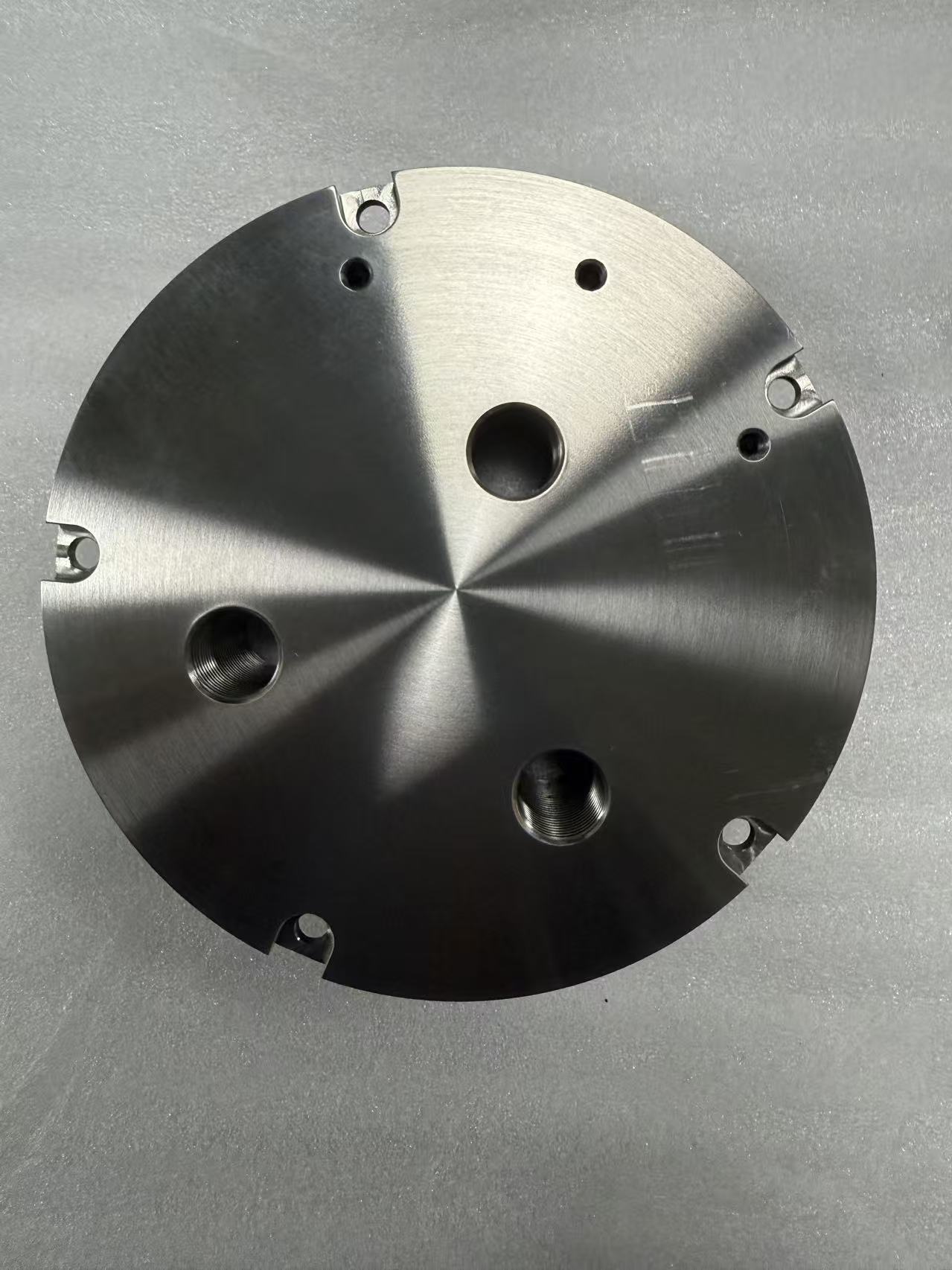
OEM CNC machining is a production mode in which a manufacturer produces parts according to the buyer's design and specification. In practice, this means the supplier works from your 2D/3D drawings and controls material selection, dimensional tolerance, surface treatment, machining finish, inspection, and delivery. The parts carry your designation and are integrated into your product or assembly.
Suzhou ECOD Precision Manufacturing Co., Ltd (ECOD) defines its service scope as CNC turning, CNC milling, drilling, grinding, tapping, EDM, and precision assembly, with a product range covering CNC Milling Parts, CNC Turning Parts, 5-Axis CNC Machining, and Precision Machined Components. For a buyer, this breadth matters because complex parts often require multiple operations: a part may start on a lathe, move to a milling center, and end with grinding or EDM. One supplier that can sequence these operations under one quality system reduces handoff risk.
OEM vs. ODM: What Is the Difference for a Custom Metal Parts Buyer?
Two related production modes appear frequently in supplier documents: OEM (Original Equipment Manufacturer) and ODM (Original Design Manufacturer). Under OEM, the customer owns the design and the manufacturer executes it. Under ODM, the manufacturer may contribute design or engineering input, sometimes from concept or from a modified standard configuration.
ECOD offers both production modes. For a buyer, the practical consequence is flexibility: if your drawings are finalized, the manufacturer can quote and produce them; if your design still needs manufacturing input, the engineering team can provide DFM (Design for Manufacturing) optimization to simplify production and reduce cost. In either case, the manufacturing standard is the same: custom CNC machining according to customer 2D/3D drawings, material, dimensional tolerance, surface treatment, and machining finish.
Why OEM Buyers Should Look Beyond Basic CNC Milling and Turning Capability
It is common for a CNC machine shop to say it offers milling and turning. What separates an OEM production partner from a job shop is depth: equipment range, tolerance control, inspection coverage, and the ability to support quantities from prototype to mass production.
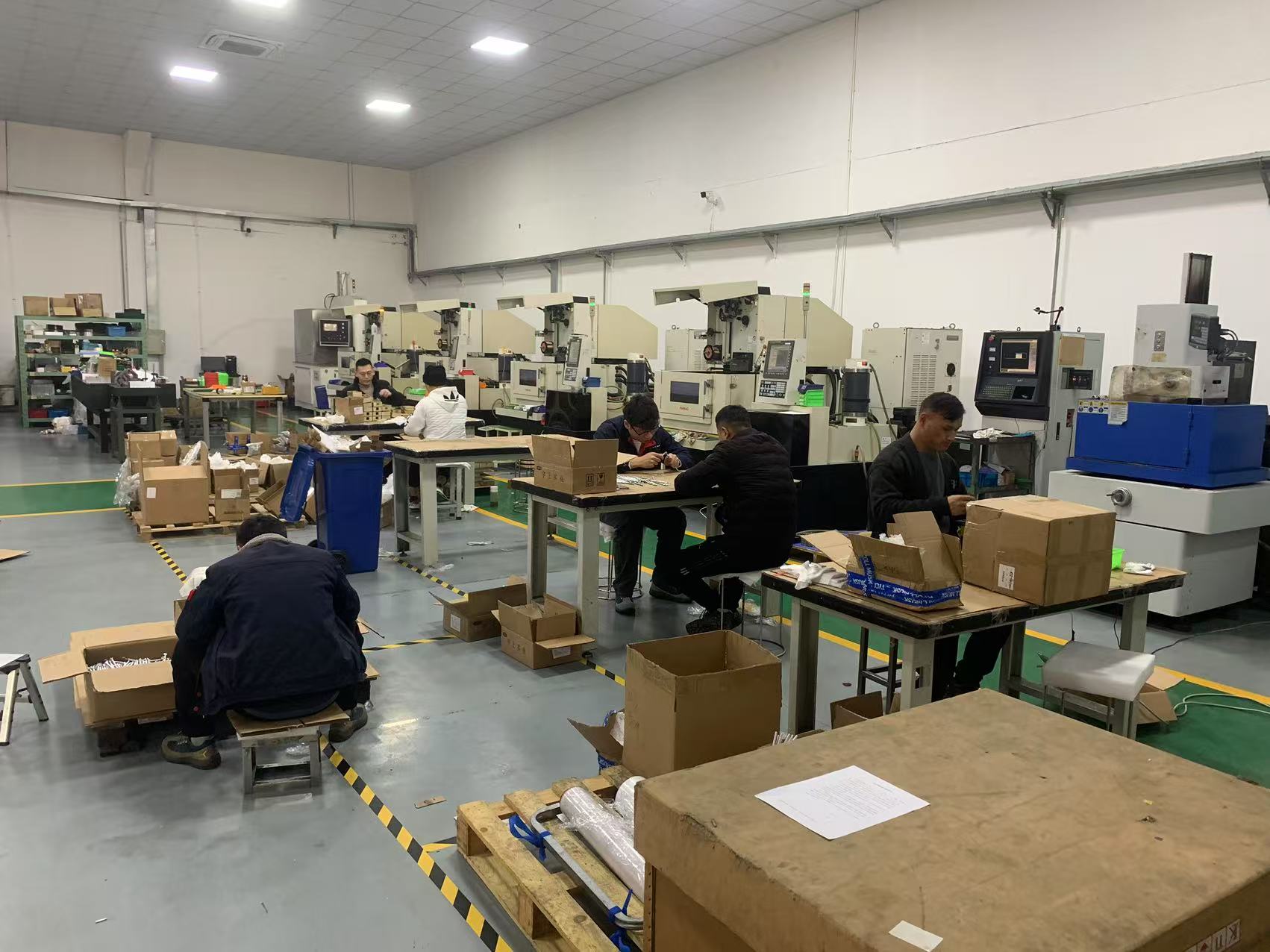
ECOD's factory operates with 3/4/5-axis CNC machining centers, CNC lathes, and precision grinding equipment. The supporting facts a buyer should connect to production outcomes are:
- 5-axis machining reduces setup count for complex geometries and improves consistency on multi-sided features.
- Precision grinding complements milling and turning when surface finish and parallelism are critical.
- In-house capability across turning, milling, grinding, and assembly means fewer subcontracting handoffs.
- DFM support means the supplier can point out manufacturability issues before they become scrap or rework.
For the buyer, capability verification should therefore include questions about machines, processes, inspection equipment, and engineering support, not merely a general phrase such as “custom CNC machining available.”
What Materials Can an OEM CNC Machining Service Handle?
Material compatibility determines whether a supplier can produce your part without distorting its mechanical properties or surface behavior. ECOD regularly machines aluminum, stainless steel, copper, carbon steel, various alloy steels, titanium, and plastics such as POM and Nylon.
From a procurement perspective, material testing matters as much as material availability. A reliable OEM supplier should provide material certificates with each shipment, along with dimensional inspection reports. Buyers using 6061-T6 aluminum or stainless steel can also benchmark against industry norms: aluminum 6061-T6 is widely used in CNC machining because of its combination of machinability and strength-to-weight ratio, and stainless steel is chosen for corrosion resistance and strength in demanding environments.
Customization Options: What Exactly Can Be Controlled?
The term “customization” in CNC machining is meaningful only when it is specific. A supplier should confirm that it can control each of the following:
- 2D/3D drawings: the basis of geometry and tolerance interpretation.
- Material: grade, temper, and supplier traceability.
- Dimensional tolerance: the measurable limits your assembly requires.
- Surface treatment: anodizing, plating, passivation, or other specified finishes.
- Machining finish: achievable surface roughness on each relevant surface.
ECOD's customization process is defined exactly around these five inputs. A buyer evaluating a CNC machining service provider should request confirmation that these parameters will be locked into the manufacturing and inspection plan before production, rather than treated as loose intentions.
From Prototype to OEM Mass Production: How the Production Mode Changes
An OEM buyer often enters a relationship with a prototype, then releases larger quantities. The production mode must therefore be flexible.
ECOD supports prototype, small-batch, and mass production. Its minimum order quantity is 1 piece, which supports early-stage validation and replacement-part sourcing. Monthly capacity is 100,000 pieces, which gives existing customers room to scale without transferring to a second, unvalidated supplier. Lead time is quoted at 10–60 days depending on project complexity, material lead time, quantity, and surface treatment.
For the buyer, the sequence below shows how an OEM engagement typically moves:
- Share 2D/3D drawings and a specification of material, tolerance, surface treatment, and finish.
- The manufacturer reviews the design, provides DFM feedback, and issues a quotation with lead time.
- One sample is produced and inspected for dimensions and surface quality.
- After sample approval, production begins, with 100% inspection and material certificates.
- Parts are packed and shipped under an agreed trade term.
- Technical support continues after delivery for subsequent orders or design adjustments.
Quality Control in OEM CNC Machining: What Should a Buyer Demand?
For OEM parts, quality control is the difference between a component that fits on arrival and a component that creates rework downstream. ECOD states that 100% test is applied to its quality control process, and every order includes complete material certificates and dimensional inspection reports. In addition, the company's ISO 9001 certification (certificate number 33826Q00178R000, issued by Shanghai Wozhong Certification Co., Ltd) covers the sales of custom CNC machining parts under GB/T19001-2016/ISO9001:2015.
A buyer should treat ISO 9001 as a baseline, not a differentiator, and then verify:
- Whether the certificate is current (check the issue and expiry dates).
- Whether its scope covers the purchased service.
- Whether the supplier actually provides inspection reports per order.
- Whether factory inspection is possible before mass production.
In regulated sectors such as aerospace and medical, buyers should also check whether the supplier meets the required sector-specific standards. Aerospace programs often require AS9100, which incorporates ISO 9001 plus additional requirements for safety and reliability. Medical device production may need ISO 13485. A supplier that can document its quality baseline makes this verification easier, but the buyer remains responsible for confirming sector fit.
Supply Chain and Commercial Terms: MOQ, Payment, Delivery, and Inspection
OEM CNC machining is a commercial relationship as much as a technical one. Before placing an order, a buyer should verify the commercial terms that affect cash flow, risk, and delivery.
| Procurement parameter | ECOD practice | Why it matters to an OEM buyer |
|---|---|---|
| MOQ | 1 piece | Low-volume startups, prototypes, and urgent spare parts can be sourced without forcing inventory. |
| Monthly capacity | 100,000 pieces | Able to support scale-up after design validation. |
| Lead time | 10–60 days | Indicates planning flexibility; final lead time depends on drawings, material, and finish. |
| Payment terms | 30/70 | 30% deposit and 70% before shipment is a common structure for custom parts; confirm before production. |
| Delivery terms | EXW / FOB / CIF / CIP / FCA / CPT / CFR / DAP / DDP | Multiple Incoterms allow the buyer to choose control of freight and customs risk. |
| Inspection | Factory inspection accepted | Allows third-party or buyer inspection before shipment. |
| After-sales support | Technical support | Useful for subsequent revisions, repeat orders, and application issues. |
For an international buyer, the most relevant export fact is also simple: approximately 100% of ECOD's sales are export business, serving Europe, the Middle East, North America, and Asia. A supplier that already manages export documentation, Incoterms, and international communication reduces the friction commonly found in cross-border OEM programs.
Industry Evidence from Two OEM CNC Machining Programs
OEM capability claims become useful when they are attached to actual programs. Two published case references illustrate the type of work ECOD has supported:
| Client industry | Market | Application | Quantity | Duration | Stated result |
|---|---|---|---|---|---|
| Oil & gas | United Arab Emirates | Gas & oil equipment components | 10,000 pieces | 5 years | Improved equipment reliability; adapted to harsh oil & gas working environments |
| Aerospace | Russia | UAV components | 1,000,000 pcs | 1 year | Stable quality in mass production; fully matching aerospace industry precision standards |
These are not generic marketing claims; they are attributable project facts with defined quantities, durations, industries, and outcomes. For a buyer, they help answer the question: “Has this supplier run OEM programs at scale, with quality standards comparable to mine?” The aerospace case is especially relevant because it demonstrates multi-year or high-volume consistency under precision expectations.
How to Evaluate an OEM CNC Machining Service Provider: A 7-Point Checklist
Use the following checklist during supplier comparison. It is designed around the information an OEM buyer actually needs before committing a project.
- Confirm OEM/ODM availability. A supplier should clearly state whether it can work from your drawings and whether it can contribute design input if needed.
- Map the equipment to your part geometry. Verify that the shop has the right mix of 3/4/5-axis machining, turning, grinding, and EDM for your features.
- Check material coverage. Your specified grade should be one the supplier machines regularly and can certificate.
- Ask how customization is controlled. Request a written confirmation of drawing, material, tolerance, surface treatment, and finish.
- Verify quality evidence. Ask for ISO 9001 status, inspection reports, material certificates, and any industry-specific certifications relevant to your sector.
- Test the commercial model. Confirm MOQ, payment terms, Incoterms, lead time, and factory inspection policy in writing.
- Request a sample before mass production. The low MOQ of 1 piece makes sample-first validation practical.
Common Mistakes When Sourcing OEM CNC Machining Services
Even experienced procurement teams can fall into these traps:
- Treating a low quote as the only signal. A quote without a defined tolerance, material certificate, and inspection plan is not comparable to another quote that includes them.
- Skipping DFM review. A part that is difficult to machine will generate cost and lead time later. A supplier that reviews the drawing before quoting is more likely to deliver on time.
- Ignoring the difference between “we can machine it” and “we can inspect and certify it.” For OEM parts, the certificate and dimensional report are part of the deliverable.
- Under-weighting communication and time zone fit. With 100% export exposure and markets in Europe, the Middle East, North America, and Asia, a supplier's export experience reduces the risk of misalignment in documentation and quality expectations.
Why Suzhou ECOD Position Itself as an OEM CNC Machining Service Partner
Suzhou ECOD Precision Manufacturing Co., Ltd is a precision machining manufacturer founded in 2005, located in Suzhou New District, China, with a 40,000 m² facility, 350 employees, and a 25-engineer R&D team. Annual output is approximately 1,000,000 units. The company focuses exclusively on high-precision CNC machining services for aerospace, medical, new energy, and automation industries, in addition to oil & gas and other industrial segments.
For an OEM buyer, the relevant interpretation is not the company's size alone, but how these numbers translate into procurement value:
- 25 engineers mean DFM and process design are addressed before the machine runs.
- 40,000 m² and 350 employees support both small-batch and mass-production timelines.
- 100% export explains why international communication, Incoterms, and documentation are part of the daily workflow.
- ISO 9001 and case evidence provide auditable references for quality.
Frequently Asked Questions
Is the OEM CNC machining service manufacturer ISO 9001 certified for custom metal parts?
Yes, Suzhou ECOD Precision Manufacturing Co., Ltd holds ISO 9001 certification with certificate number 33826Q00178R000, issued by Shanghai Wozhong Certification Co., Ltd, valid from 2026-06-16 to 2029-06-15. The certified scope covers custom CNC machining parts sales under GB/T19001-2016/ISO9001:2015. Buyers in aerospace or medical sectors should verify whether AS9100 or ISO 13485 is additionally required for their specific program.
What custom CNC machining capabilities does the manufacturer provide?
The manufacturer offers CNC milling parts, CNC turning parts, 5-axis CNC machining, and precision machined components. Production includes CNC turning, CNC milling, drilling, grinding, tapping, and EDM. The factory is equipped with advanced 3/4/5-axis CNC machining centers, CNC lathes, and precision grinding equipment, and supports prototype, small-batch, and mass production.
Can the manufacturer tailor custom CNC machining to drawings, materials, tolerance, and surface treatment?
Yes. Technical support for custom CNC machining is provided according to customer 2D/3D drawings, material, dimensional tolerance, surface treatment, and machining finish. Both OEM and ODM production services are available, and DFM optimization is provided to simplify production and reduce cost.
What is the minimum order quantity for OEM CNC machining services?
The minimum order quantity is 1 piece, which allows buyers to validate a design with a single sample before committing to larger volumes. Monthly capacity is approximately 100,000 pieces for scale-up orders, and lead time is typically 10–60 days depending on project requirements.
What is a realistic lead time for custom OEM CNC machined parts?
Lead time is typically 10–60 days. The final duration depends on drawing complexity, material availability, dimensional tolerances, surface treatment, and order quantity. Because ECOD maintains an export-oriented production workflow, lead time also includes inspection and international delivery under the agreed Incoterm.
To get an accurate timeline for your part, send your 2D/3D drawings and specification to the ECOD engineering team for a project-based evaluation.
Need a custom metal parts supplier that can move from drawing to sample to mass production?
Send your 2D/3D drawings and material/tolerance requirements to ECOD for a DFM review and quotation.
Start with a drawing review on WhatsApp or Email info@ecodcn.com
Contact: Daisy | Tel/WhatsApp: +86 15527751869 / +86 18086086615 | Address: No.151, Huashan Road, Suzhou New District, 215129, Suzhou, China
Download company brochure: ECOD brochure (PDF)
This article is published by Suzhou ECOD Precision Manufacturing Co., Ltd. Market data cited from third-party sources is provided for context and reflects the stated source at the time of reference.
Have Questions or Need More Details?
Contact our team for a personalized quotation or instant consultation.
Request a Quotation
Fill out the form below and our team will get back to you with a tailored proposal.
WhatsApp Direct Chat
Prefer to chat in real-time? Message us on WhatsApp for instant assistance & quick answers.
- Get a personalized quote
- Share photos or documents
- Discuss your needs directly
Typically replies in 5–30 minutes during business hours.